Is Plastic the Secret Ingredient in your Beauty Products? Learn How to Avoid Microplastics in your Beauty routine
Did you know that tiny plastic particles can hide in your beauty products? In this article, we’ll explore the presence of microplastics in beauty products, where they lurk, and how to make informed choices.
If you care about what goes on your face, into your body, and our oceans. Let’s get started!
Affiliate Disclosure: This post contains affiliate links. Cute Life Essentials is a participant in the GoAffPro Affiliate Program, an affiliate advertising program designed to provide a means for sites to earn advertising fees by advertising and linking to the partner site. As an Amazon Associate, I earn from qualifying purchases.
You can skip the read and GO to Choosing Zero Plastic Cosmetics here ↓
Microplastics
Microplastics: Tiny but mighty enemies of our oceans.
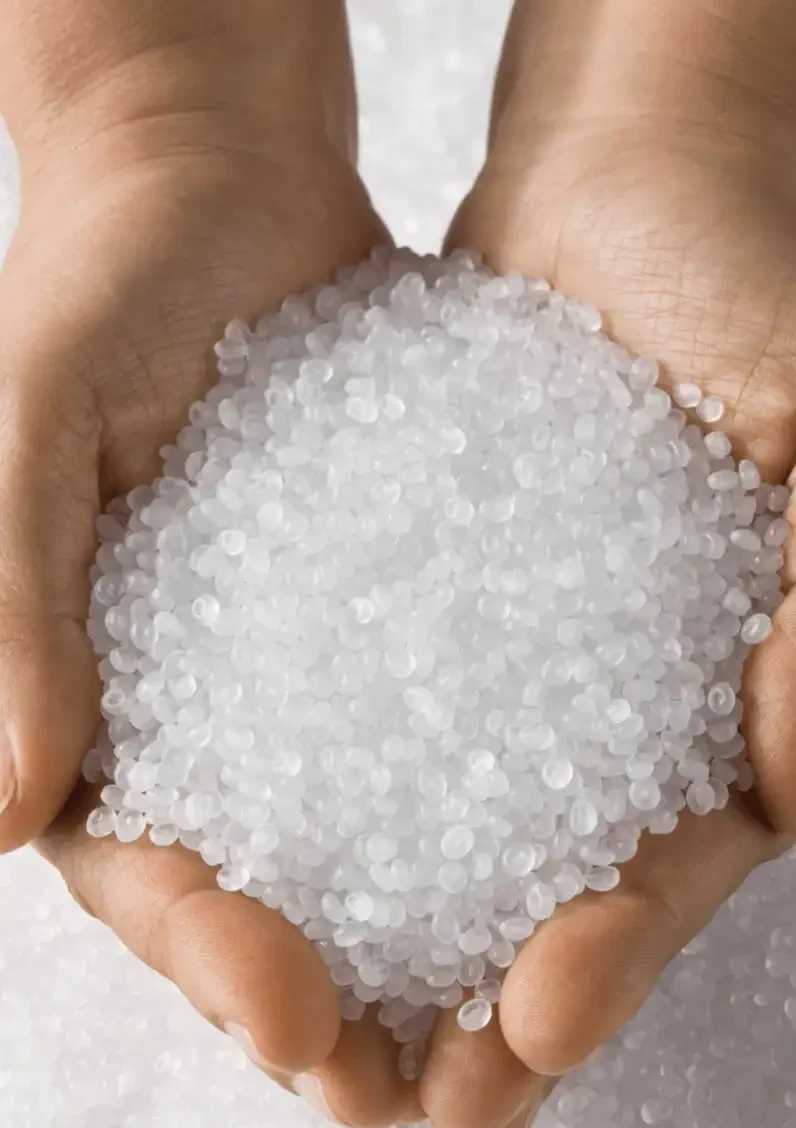
Microplastics are tiny bits of plastic, less than 5mm big, that can be hidden in many beauty products. Imagine rubbing face cream on your skin and unknowingly applying tiny plastic particles!
These minuscule foes include microbeads used for scrubbing and other sneaky forms that act as emulsifiers to mix things up in cosmetics.
WANT TO LEARN MORE ABOUT AVOIDING MICROPLASTICS? check out this post to learn how >>> ➜➤ How to avoid microplastics .
What are microbeads?
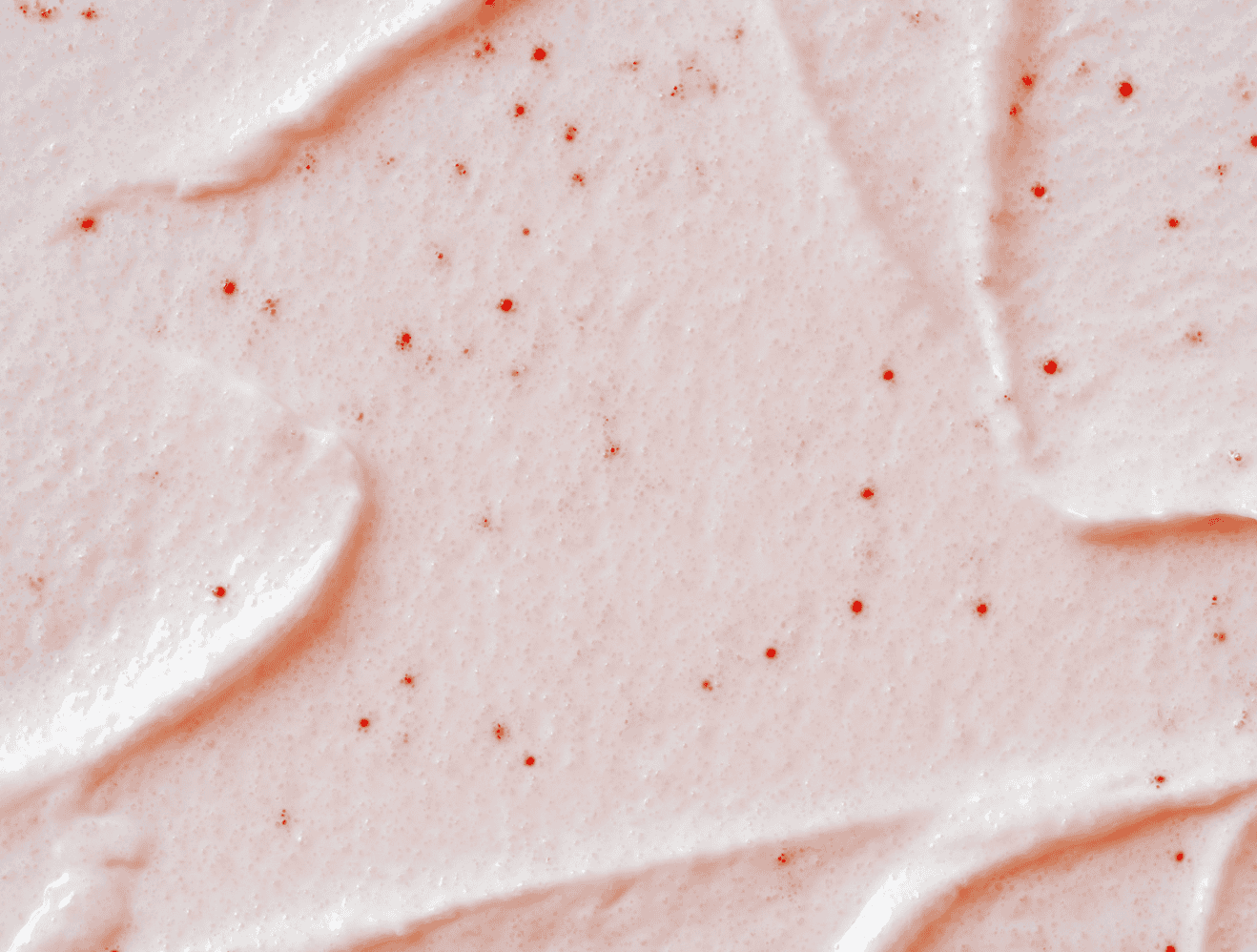
Shifting our focus from the general issue of microplastics, let’s concentrate more specifically on microbeads. These minuscule plastic elements pervade our cosmetics, contributing significantly to the scrubbing and exfoliating process of our skin.
You can imagine the effect of rubbing tiny plastic balls on your skin or teeth – that’s the scenario every time you use products containing microbeads.
With microbead products, every time we wash our face or apply makeup, we send microplastics down the drain.
Microplastics in Beauty Products
Microplastics are commonly found in various beauty products. They can be present in scrubs, toothpaste, and even makeup.
Where microplastics are found in beauty products
Microplastics hide in many beauty products we use every day. Some examples of products where microplastics are used:
- Sunscreens often contain microplastics that help to make them spread easily on your skin.
- Shampoos are another culprit, using microplastics for a silky texture. This means every time you wash your hair, plastics might be flowing down the drain.
- Makeup, including foundations, lipsticks, mascara, highlighters, and face powder, can use microplastics for smooth application. Every swipe leaves a mark not just on you but potentially on nature as well.
- Some deodorants rely on microplastics to glide on your skin better.
- Many lotions use these tiny plastics as fillers to create a better product texture.
- Exfoliating products like scrubs and toothpaste can be made with plastic microbeads.
But, there is a price for the cheap convenience of using microplastics in personal care products.
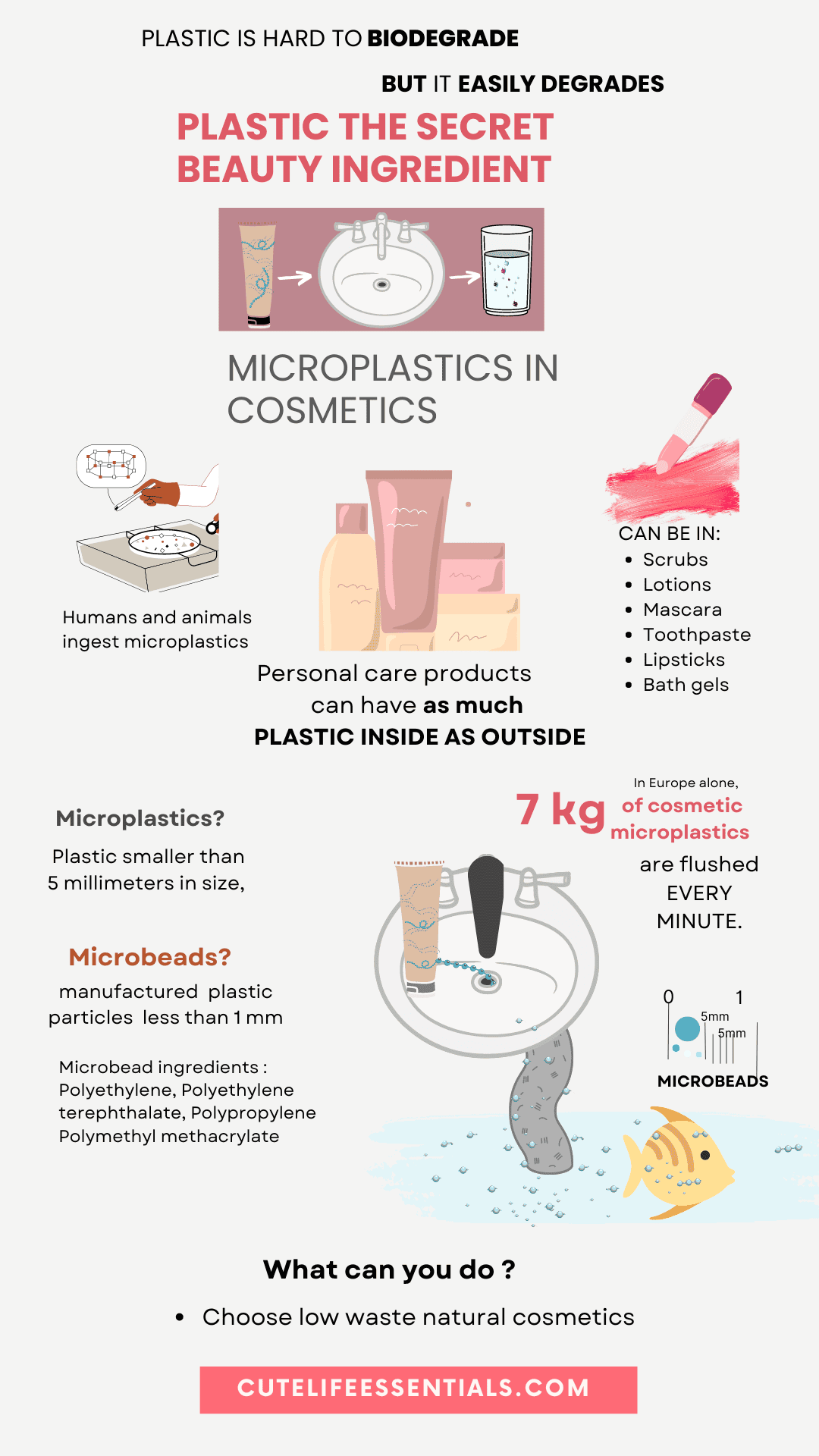
In Europe alone, cosmetics send over 7 kg of microplastics flying into the environment every minute. That’s a mountain of plastic nobody asked for!
That’s a lot, right? And these plastics don’t just disappear. Instead, they stick around, causing plastic pollution that affects ocean life and ends up in the food chain.
Here’s another shocker: Europe alone sees about 3,800 tons of microplastics released into nature each year through cosmetic products. This isn’t just an “across the pond” problem; it’s a global crisis affecting biodiversity, water quality, and climate change.
How Microplastics from Cosmetics pollute
Microplastics sneak into the environment through waste from cosmetics production and consumer use. Plastic packaging also adds to the pollution.
Marine animals eat microplastics because these tiny pieces trick them into thinking they’re food. Imagine a fish you might eat for dinner with microplastics in its system because it couldn’t tell the difference between plastic and its usual snacks.
This messes up entire marine food chains, putting our seafood at risk. Also, these plastics don’t just sit there; they collect harmful pollutants like POPs (Persistent Organic Pollutants).
These nasty chemicals stick to the plastics and can end up inside any animal that eats them, including us!
Wastes from cosmetics production
When beauty products use microbeads, the resulting water can be polluted by microplastics. The wastewater from their production can contaminate water bodies.
The sad part is these particles are so small they bypass most filters meant to keep them out of rivers and oceans. So next time you rinse off your face scrub or lotion, think about where those invisible pollutants might end up!
Waste from consumer use
When consumers wash off beauty products containing microplastics, these particles go down the drain and end up in the environment. This occurs when people use rinse-off products like exfoliating scrubs, shower gels, and toothpaste that contain tiny plastic beads or particles.
These microplastics then enter rivers, lakes, and oceans, contributing to pollution.
This consumer waste greatly affects the ecosystem, as wastewater treatment plants struggle to filter out these minuscule plastics effectively before releasing treated water back into natural ecosystems.
Consequently, this leads to environmental degradation caused by these synthetic polymers entering the environment at an alarming rate.
Pollution from plastic packaging
Packaging in the cosmetics industry heavily relies on plastics.
Most packaging in the cosmetics industry is made of plastic, with conventional plastic production reaching around 335 million tons per year. Biodegradable polymers make for less than 1%, making it evident that there’s a significant need to address plastic pollution from packaging within the beauty products sector.
Mythbusting the harmless claims of microplastics.
Let’s clear the air on microplastics. The belief that they are harmless is a big myth! they can negatively affect ecosystems and human health ( this study showed that about 80% of human blood tests showed synthetic polymers.)
Microplastics aren’t as innocent as some people think! Look for them in your products, as they can seriously impact our natural environment.
Taking Action Against Microplastics in Beauty Products
Phasing out microplastics in the cosmetics industry
Some in the cosmetics industry are joining transitioning efforts to eliminate microplastics. The European Chemicals Agency (ECHA) is aiming to reduce 500,000 tons in the next 20 years. Proposed legislation suggests regulating synthetic polymers within four to six years.
However, these proposals and regulations may not cover all synthetic polymers used in cosmetics.
To address this issue, companies are researching alternative ingredients and sustainable innovations, such as biopolymers for packaging and natural preservatives. Natural polymers, such as silk, wool, pectin, and proteins, occur in nature and are naturally biodegradable.
How to Check for microplastics in products
Want to avoid products with microplastics? Here’s how you can check:
- Read the Ingredients List
- Use an app to identify them
Check the packaging for common polymers that make up microbead ingredients such as:
- Polyethylene (PE)
- Polyethylene terephthalate (PET)
- Polypropylene (PP)
- Polylactic acid
- Polymethyl methacrylate (PMMA)
- Nylon (PA)
Other Liquid Polymer Plastics
Technically, “plastic” refers to a polymer that can be molded into a solid object, such as a microbead.
But Plastics can also present themselves in nonsolid forms .
For instance, polyimide-1, polyquaternium-11, and PVP/VA copolymers are polymers used in gels and foams that are not readily biodegradable and can accumulate in the water sources after being washed down the drain.
In skincare and personal care products, other liquid polymers that are frequently used are silicone-based ingredients.
Unlike other polymer plastics, some silicones are biodegradable, while others can persist in the environment, accumulate, and be toxic. Whether silicone will biodegrade depends on various factors. For example, it might break down more easily on land but remain in waterways.
The suffixes that can help you identify silicone-based skincare ingredients are “-cone” or “-siloxane” on the ingredients list on the back of the product packaging. Some precise examples are:
- dimethicone
- Cyclomethicone
- polysilicone
- Cyclopentasiloxane
Microplastic-free personal care products
Choosing “Zero Plastics inside” products
How can you ditch microplastics and liquid polymers from your personal care and beauty routine? Simple: Slowly embrace alternatives with “zero plastics inside” that are better for the environment and your health.
To avoid formulations with microplastics, check the product ingredients list and consider products like the ones below (free from plastics inside) when purchasing new products.
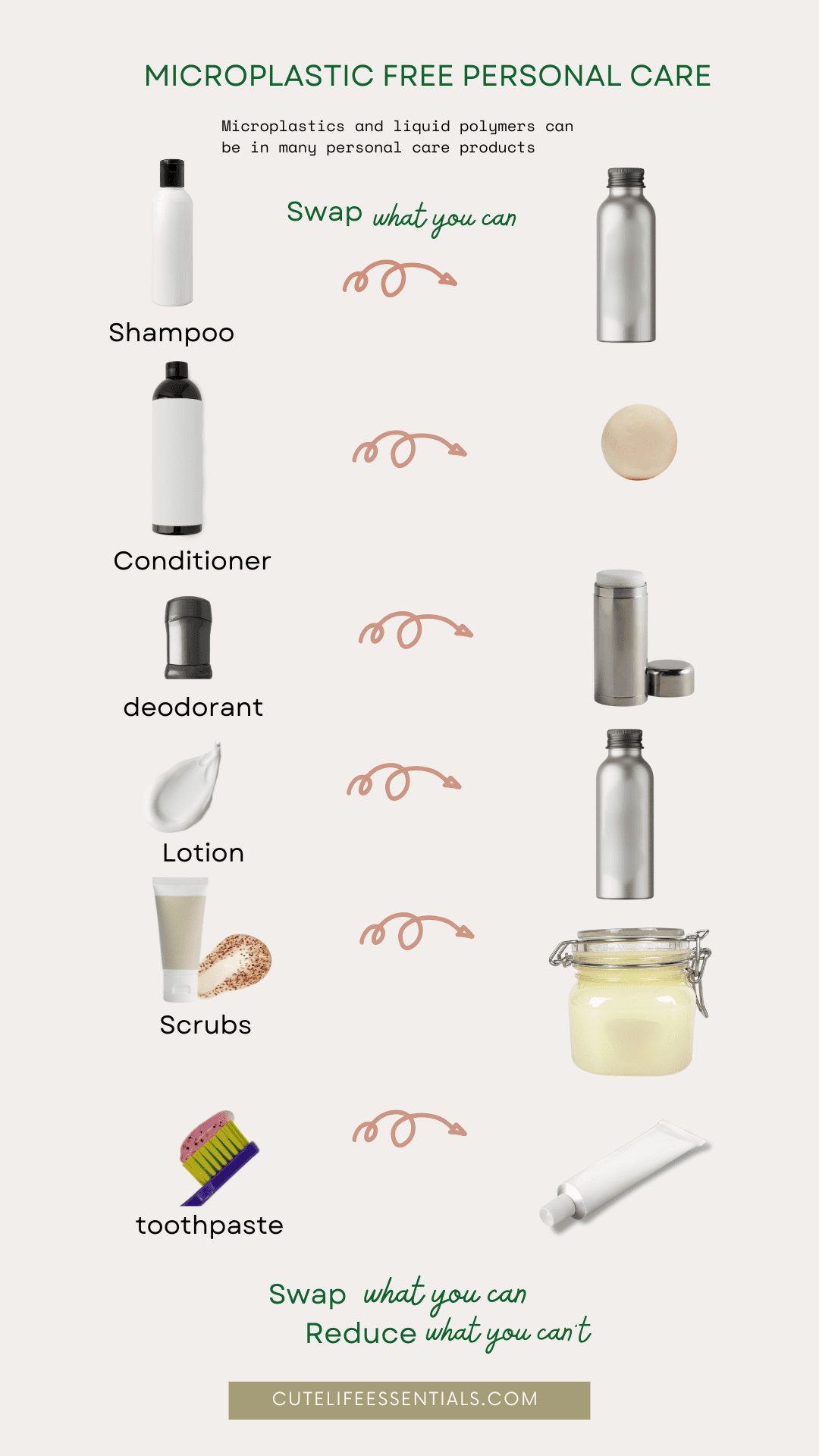
Shampoos ➔ Plastic clean shampoo
Conditioner➔ Plastic clean conditioner | Plastic clean Conditioner Bar
Deodorant➔ Plastic clean deodorant -metal | Plastic clean deodorant – Paper
Lotion➔ Plastic clean lotion
Scrubs ➔ Plastic clean scrub
Toothpaste➔ Plastic clean toothpaste
Bath gel➔ Plastic clean bath gel
READ MORE >>> ➜➤ → How to avoid microplastics? Plastics all around you, plastics inside you
READ MORE >>> ➜➤ → Everyday Plastic items to ditch and Alternatives To Switch To Today
“Zero Plastics Inside” cosmetics
You can also opt for cosmetics without microplastics and polymers in their formulation. Check the ingredients from any cosmetics you buy; below are some MICROPLASTIC-FREE Cosmetic options.
A note on highlighters: I was almost going to leave out an alternative for the highlighter category,I had a lot of trouble finding one without liquid plastics, even from “clean ingredients” brands – I was shocked, too : (
Anyway, just when I was about to give up, I found a natural alternative with NO plastic formulation and a short, READABLE ingredients list.
-see, that’s why I always say it’s best to check the ingredients. ALWAYS
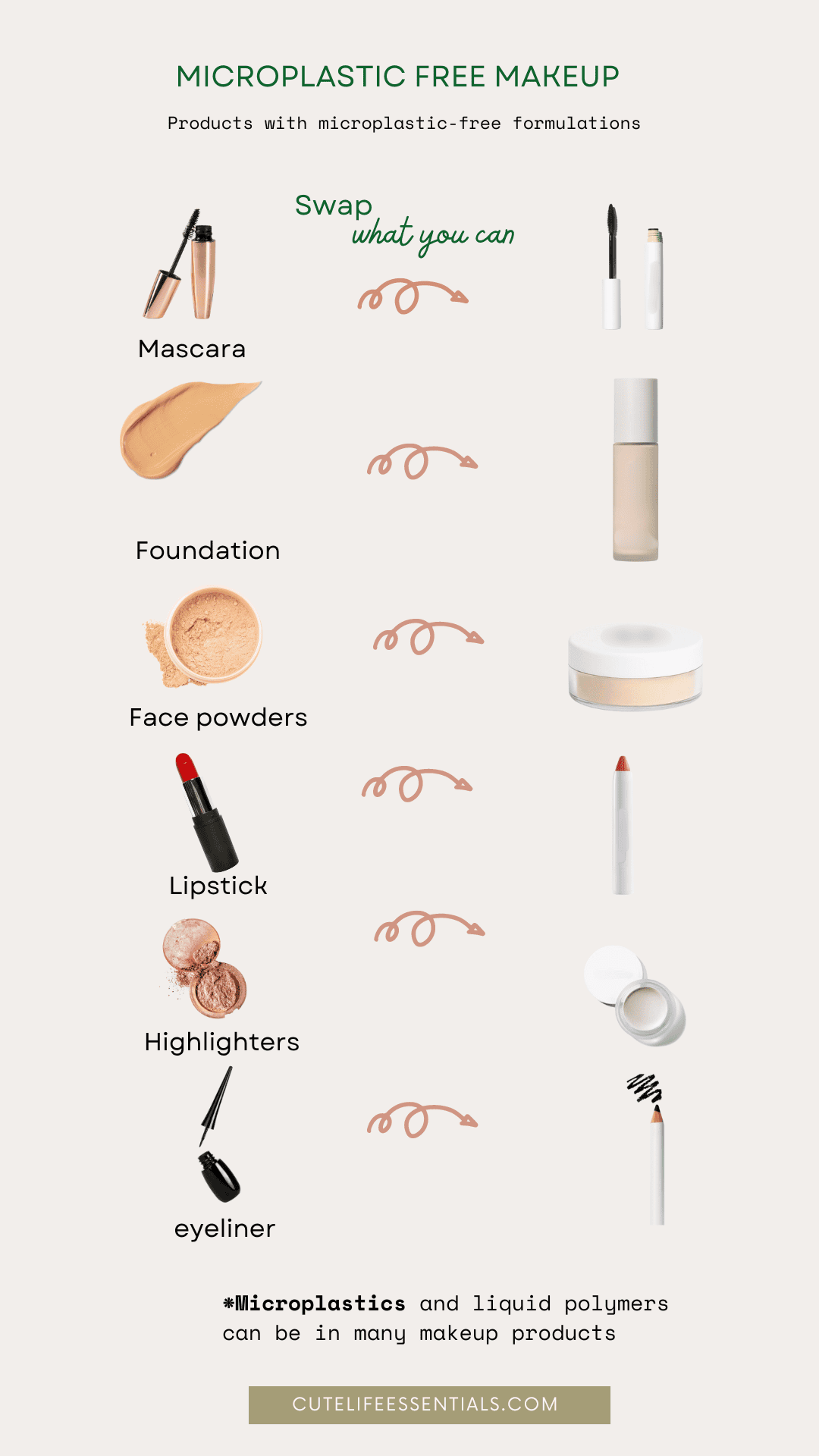
Mascara➔ Plastic clean mascara
Foundation➔ Plastic clean foundation
Face powders➔ Plastic clean face powder
Lipsticks➔ Plastic clean lipstick
Highlighters➔ Plastic clean highlighter
Eyeliner➔ Plastic clean Eyeliner
READ MORE >>> ➜➤ → Unlocking the Secrets of Sustainable Beauty: A Simple Guide
RECAP
- Microplastics are tiny plastic in many beauty products, hurting the environment and marine life.
- Over 500 microplastic ingredients found in cosmetics can end up in oceans, harming animals and possibly entering our food chain.
- Many people think only scrubbing products contain microplastics, but they are also in lotions, makeup, sunscreen, and more. Not all wastewater plants can filter them out.
- What to do?
- Check labels, use apps to identify products with microplastics, and support brands that avoid them.
Now you have the info you need to say goodbye to microplastics in your beauty products!
Ditch microplastics from your beauty routine and opt for products with natural alternatives. This will keep the environment clean while caring for your skin and hair.
OVER TO YOU…
Has this blog post helped you? If so, I’d love to hear about it! In the comments below, let me know what you will do to avoid microplastics in cosmetics.
Save this post to read later.