
Unlocking the Secrets of Sustainable Beauty: A Simple Guide
One of the trickiest aspects of embracing conscious beauty is choosing products that do the job but are also good for you. With so many options and sustainable beauty brand promises, it can be tricky to know what to consider. But don’t worry—this guide will make it simple for you to know what to consider when shopping for beauty products.
Mastering the Art of Sustainable Beauty: Everything You Need to Know
Searching for beauty products that are kind to your skin and the earth can feel like an uphill battle. Trust me, I’ve walked that confusing aisle, too, but with some digging and determination, it’s possible to find sustainable beauty products.
This guide is my way of sharing with you, some of the insights I’ve learned through the years.
It’s time to discover how to embrace products that comply with our life-centric approach, nurture our skin, and respect people and our planet. Let’s dive in!
Key Takeaways
- Sustainable beauty involves products that are good for our health and the planet.
- Look out for greenwashing and carefully check product ingredients, claims, and certifications.
- Eco-friendly packaging and organic, sustainably sourced ingredients are essential to sustainable beauty.
Understanding Sustainable Beauty
Sustainable beauty emphasizes ethical sourcing and eco-friendly practices. It’s super important to also watch out for greenwashing in the beauty industry and opt for products that are genuinely sustainable or the more sustainable option.
What is sustainable beauty?
As I see it, Sustainable beauty means using products that are good for our health and the planet. It involves natural ingredients known for their gentle touch on the skin and no or low ecological harm.
This approach to beauty focuses on reducing waste, avoiding harm to animals and people, and supporting nature.
Products in this category aim to minimize pollution and use resources wisely while delivering high-quality care to our skin.
The importance of sustainable beauty
I’ve learned that embracing sustainable beauty transforms skincare routines into a force for positive change. It’s not just about looking good; it’s about making choices that help keep our planet healthy.
Sustainable beauty is essential for our planet and our well-being. Using natural, eco-friendly products reduces the environmental impact of the beauty industry and promotes healthier living.
Beauty businesses increasingly recognize the significance of sustainability, leading to innovations in clean and ethical beauty products. Consumers are also becoming more aware of their choices, seeking out eco-friendly and cruelty-free (means not tested on animals) options that align with their values.
How to spot greenwashing in the beauty industry
Greenwashing is a deceptive marketing tactic where a company falsely presents itself as eco-friendly (having eco-friendly ingredients, processes, etc when it is not entirely accurate.
Greenwashing in the beauty industry can be spotted by closely examining product ingredients, claims, and certifications. Look for vague or unsubstantiated terms like “all-natural” or “eco-friendly” without clear evidence to back them up.
For instance, I’ve seen many beauty products claiming to be plastic-free but whose ingredients contain plastic, or claims of “good for you” or “all-natural” when their ingredients have proven synthetic and carcinogenic substances.
Always check the ingredients. ALWAYSSS! even if the brand is sustainable or you trust the brand, it’s always best to double-check.’
If you want to learn more about Sustainable beauty and what ingredients can be hiding in your products, CHECK OUT THIS POST →Is Plastic the Secret Ingredient in your Beauty Products? Learn How to Avoid Microplastics in your Beauty routine.
Pay attention to misleading images or symbols that may give a false impression of sustainability. Trustworthy certifications from recognized organizations, such as USDA Certified Organic or Leaping Bunny cruelty-free certification, can validate a brand’s commitment to genuine sustainable practices.
Check if the Packaging aligns with the brand’s environmental claims and scrutinize the transparency of their overall ingredient sourcing and manufacturing processes. Also, consider if the brand pays a living wage and provides decent conditions to their workers.
The Five Elements of Sustainable Beauty Products
Under a life-centric principle, sustainable beauty products focus on using eco-friendly packaging and sourcing ingredients responsibly. They also prioritize organic formulas, water conservation, and no exploitation.
These are the elements I consider make a beauty product sustainable:
Sustainable & organic ingredients
Sustainable ingredients have a low environmental impact and are not toxic to the user or the planet. They are cruelty-free -not tested on animals) and are fully or mostly made up of botanical ingredients.
For instance, Coconut oil, shea butter, and mango butter are common clean ingredients used in sustainable beauty products that offer nourishing properties while minimizing environmental impact.
Organic ingredients are also an element of sustainable beauty, creating formulas that are gentle on both the skin and the environment.
Organic formulas in sustainable beauty products use natural, plant-based ingredients grown without synthetic pesticides or fertilizers. These formulas often contain nourishing components like aloe vera, jojoba oil, and rosehip extract, providing benefits for both the skin and the environment.
Embracing organic formulas can help reduce the carbon footprint of beauty products and make a healthier choice.

Responsible sourcing
Responsible sourcing involves seeking ingredients and materials from suppliers committed to ethical practices. It’s crucial to prioritize suppliers who uphold fair labor standards and environmentally friendly production methods, aligning with the values of sustainable beauty.
Responsible sourcing is very important. For instance, even a clean, sustainable ingredient could become unsustainable if its extraction is tied to workers’ exploitation.
Sustainable beauty brands strive to source their non-local ingredients from fair trade partnerships, ensuring that both the people involved and the ingredients are treated with the best care to produce the best quality.
Responsible sourcing is especially important when dealing with animal-derived, animal-excedent, or animal-based products to ensure the animals are fairly treated and the natural cycles of their byproducts are respected, for example, for beeswax or wool production.
Eco-friendly Packaging
Eco-friendly Packaging minimizes the environmental impact by using materials like recycled paper, glass, and other biodegradable materials (aluminum, bamboo) and trying to reduce or avoid the use of plastics.
By reducing waste and pollution, sustainable beauty products also teach consumers to be mindful of their ecological footprint.

READ MORE >>> ➜➤ → How to avoid microplastics? Plastics all around you, plastics inside you
READ MORE >>> ➜➤ → Everyday Plastic items to ditch and Alternatives To Switch To Today
Sustainable practices in manufacturing
Manufacturing plays a crucial role in sustainable beauty, incorporating eco-friendly production methods and renewable energy sources. Sustainable practices in manufacturing entail minimizing waste, water usage, and emissions throughout the production process.
Many sustainable beauty brands prioritize water-efficient manufacturing practices and use innovative techniques to reduce water consumption during product development. Embracing sustainable manufacturing practices involves opting for eco-friendly packaging materials like recycled or biodegradable options to promote a circular economy within the beauty industry.
Fairtrade & Living wages
Brands aligned with sustainability principles strive to provide workers with a living wage and decent conditions.
Though it is not always easy or available to the end user, whenever you can look at the brand’s information on production practices and workers’ conditions, do or ask them about it.
From responsible sourcing to biodegradable packages, every step counts towards a healthier you and a healthier planet.
Consumers and brands play a vital role in shaping a more sustainable future for skincare and cosmetics. Let’s commit to mindful choices that nourish our skin, nature, and fellow brothers.
Together, we can unlock the power of sustainable beauty for a prettier future.
FAQs
- What is sustainable beauty?
As I see it, Sustainable beauty is a holistic way of caring for your health using natural, sustainable ingredients that are good for you and the plant. It strives to take care of all life forms and nature naturally.
2. How can I start my journey to sustainable beauty?
Starting a journey to sustainable beauty begins with choosing plant-based beauty products and learning more about how holistic practices can improve your overall well-being.
3. Are plant-based products better for my skin?
Typically, yes! Plant-based products use natural ingredients that are gentle on your skin. However, always check the ingredients and extraction practices; some plant-based products are mixed in or produced with harsh chemicals.
There are also animal-excedent products such as animal-shed hair or beeswax that have been used for millennia and have proven health benefits. However, they should be responsibly sourced to be sustainable, respecting natural cycles for the renewability of the byproduct -which in an age of mass profit-squeezed production could be harder to find.
4, How can I apply the info in this post?
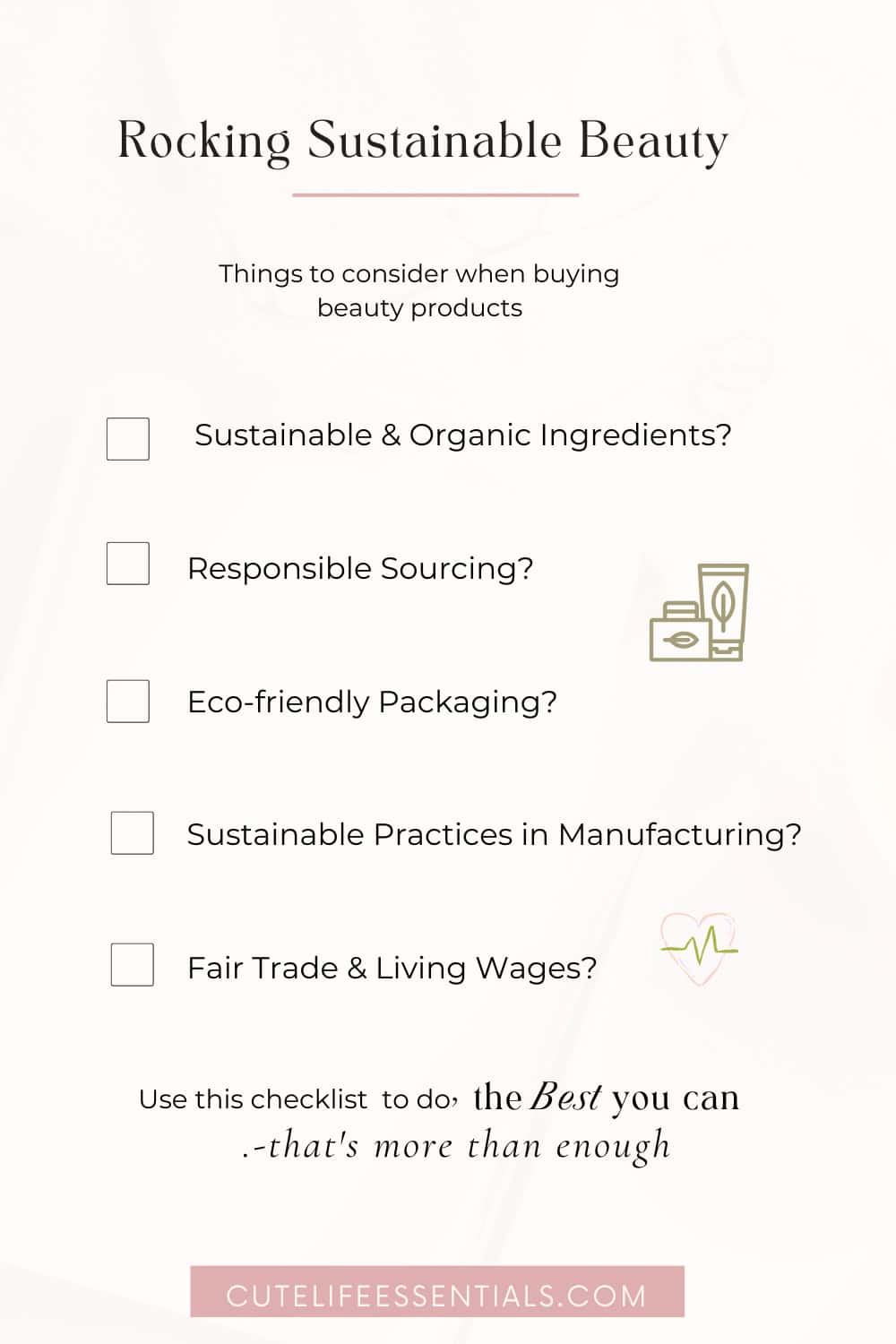
Ask yourself these questions and do the best you can with the info available to you.
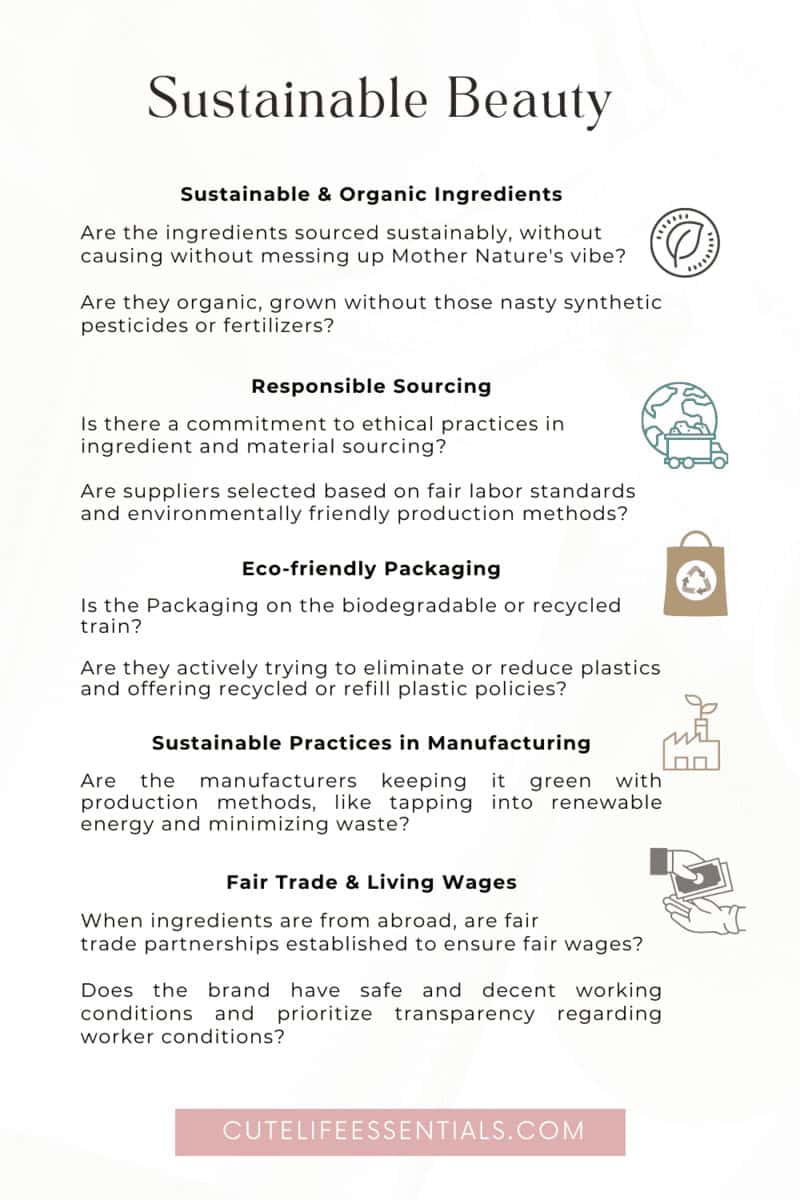
Sustainable & Organic Ingredients:
Are the ingredients sourced sustainably, without causing without messing up Mother Nature’s vibe?
Are they organic, grown without those nasty synthetic pesticides or fertilizers?
Responsible Sourcing:
Is there a commitment to ethical practices in ingredient and material sourcing?
Are suppliers selected based on fair labor standards and environmentally friendly production methods?
Eco-friendly Packaging:
Is the Packaging on the biodegradable recycled train?
Are they actively trying to reduce the use of plastics and offering recycled or refill plastic policies?
Sustainable Practices in Manufacturing:
Are the manufacturers keeping it green with production methods, like tapping into renewable energy and minimizing waste?
Fair Trade & Living Wages:
When ingredients are from abroad, are fair trade partnerships established to ensure fair wages?
Does the brand have safe and decent working conditions and prioritize transparency regarding worker conditions?
Over to you
“Alright, beauty champ! You probably have a lot going already, so use this checklist to do the best you can.-that’s more than enough!
Chill Checklist for Rocking Sustainable Beauty
Has this post helped you? If so, I’d love to hear about it! Let me know in the comments below.

I would love to see more sustainable practices in the beauty industry. Something as simple and easy as sustainable packaging is a great place to start.
I know small changes like packaging already make a huge waste difference.
Organic Ingredients is so important to our overall health and wellbeing. I love the idea of organics in sustainable beauty products.
I know sometimes the ingredients get overlooked but they are the most important part of any beauty product ;D
As I’ve grown older, I’ve found choosing a beauty product is similar to food shopping – if I don’t understand the ingredients, I don’t buy it! Or if there are 101 ingredients, it can’t be good.
In regards to packaging recycling – they do need to do more – often times you will find that the main packaging is recycleable, but the cap isn’t – this is not clear to the end consumer.
Definately agree with the food shopping analogy, if you don’t understand them or if the prodcut has amile long ingredients list, don’t buy it!
In regards to recycling, I know many products have really reduced their plastic packaging but still use plastic lids instead of metal ones.
Great post! When I first saw it, I thought it would be a list of recommended beauty products but I’m glad I was wrong! I may not be into beautifying myself but at least with this checklist, I’ll be able to know which products fit with sustainable beauty! Thanks!
Thank you! it can apply to any products we purchase outside of beauty products, glad it helped.
I didn’t even think about the work conditions while I was thinking about this, that’s a very good point! This is why I love the company Lush, I have so many of their products and they also recycle packaging. I had no idea about the fake advertising either, it’s sad that companies just want to make more money selling lies.
Thanks for sharing! and yeah, it’s disappointing how many brands get away with misleading ads.But it’s nice to know many companies are making a true effort to be more green.